

On-Camera Acting: The Craft Of The Shot
Understand what is required of you when you book the job on camera?
This class is about understanding, investigating, and practically applying the craft of acting for the camera. You’ll work on a self-selected TV/Film scene with a partner over four weeks, developing your understanding of framing, coverage and the technical demands of screen performance. You’ll learn how to make your acting choices work within the shot, from the physical demands of a wide frame to the intimacy and detail of a close-up.
What makes this class unique:
You’ll work on a self-selected TV/Film scene with a partner for four weeks.
You’ll learn the technical language of camera shots.
You’ll explore the differences between wide shots, two-shots and close-up coverage.
You’ll discover how to adjust your acting choices to suit the frame. You’ll discover how to best utilize different frames to support your acting choices.
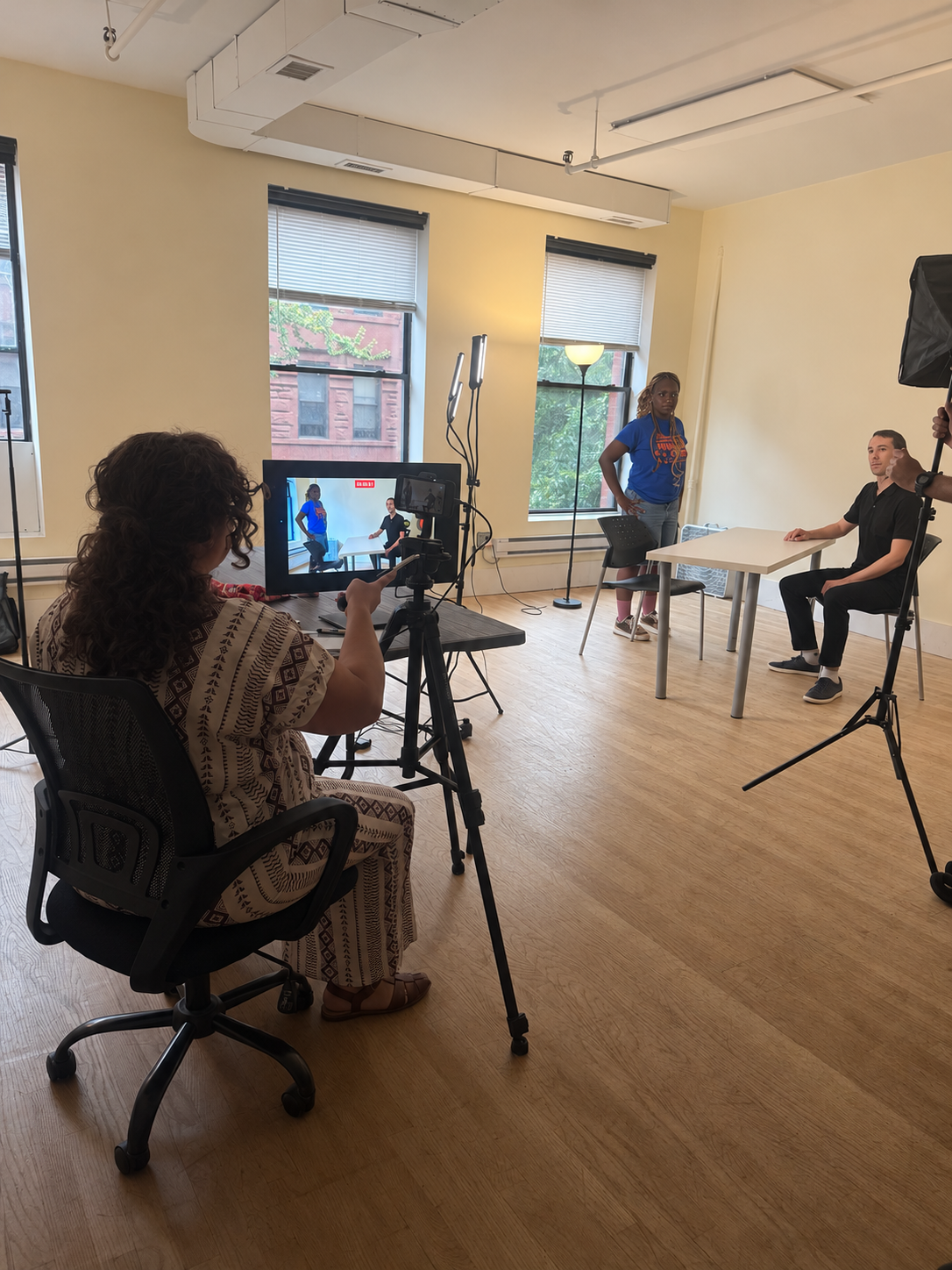
You’ll work with professional studio equipment and use your own phone to capture your footage.
You’ll learn by watching your fellow actors’ work played back live.
You will work with the studio’s professional equipment but use your own phone so that the footage is immediately available to you to review after class.
The work is shared live on a monitor so those actors not working to get to learn through watching in the same way acting, producers and directors do.
MONDAYS
6PM - 10PM
353 W 48th St
12 actors only
4 hours
$325 (four session cycle)
To keep working time in class consistent class duration may be reduced depending on enrollment.
Frequently Asked Questions:
IS THIS CLASS RIGHT FOR ME?
1. Do I need previous acting or on-camera experience?
If you’ve done some acting and are new to working on camera, this class can help you make that transition. If this would be your first acting class, get in touch and tell us a little about yourself. We’ll help you find a good starting point.2. I’ve mostly worked onstage. Is this class a good fit for me?
Yes. You’ll bring the same skills you use onstage to a different setup. Working on camera lets you see how things like where you look, how you listen, and when you move affect what the audience picks up in a close-up.3. What happens in a typical class?
You’ll work on a scene with a partner while the rest of the class watches a live feed on a monitor. Dierdre gives you an adjustment, you try the scene again, and everyone gets to see how that change reads on camera.4. Will I get to act on camera every week?
Yes. Each actor gets practical on-camera time in every session. The setup may vary from week to week. You might work in a shot that includes both actors or take turns working in close-up.5. How much individual feedback will I get?
Dierdre gives you specific feedback during your scene work and time to apply it in another take. If you’re working in separate close-ups, each actor gets a turn as the focus of the shot.6. Can I audit a class for free before enrolling?
Yes. You’re welcome to observe a class for free before you enrol. It’s a chance to see how Dierdre works, how actors receive feedback, and what a session feels like. Click the audit button at the top of this page arrange a visit.WHAT WILL WE WORK ON?
7. What skills will I develop in this class?
You’ll practise listening and responding truthfully on camera, taking direction between takes, and adapting your work to the way a scene is framed. You’ll also get to see how small changes in your performance read on the monitor.8. Will we work on scenes, auditions, or both?
This class is on-camera scene work with a partner. Our ‘Self Tape to Screen’ class covers both auditioning and what to do once you book the role and our ‘Master The Self Tape’ class focuses exclusively on the self tape audition.9. How is this different from a self-tape class?
In this class, you work on scenes with a partner and explore how your performance reads in different shots. In Self-Tape, the focus is on preparing and recording an audition, including choices around framing, eyelines, working with a reader and using Dierdre’s ‘4 takes only’ and ‘15 minutes only’ approach to taping. Visit the ‘Master The Self Tape’ class page for more info on that specific class.10. Will I learn how to adjust my performance for a close-up or a wider shot?
Yes. One of the primary focuses of this class is to teach you how to recalibrate a performance based on the size of the frame and the distance from the camera.11. Will we work on practical skills like hitting marks, finding eye-lines, and maintaining continuity?
Dierdre will be giving a combination of technical and acting notes and adjustments based on what she believes you need to learn in that moment. Her expertise spans all screen acting information so if you have specific questions, she will be able to answer them.12. What kind of material do we use? Will we work on both comedy and drama?
Scenes are self selected so that you get to focus on the genre and style you prefer or want to be challenged by.HOW DOES CLASS WORK?
13. Who teaches the class, and what’s their approach to screen acting?
Dierdre Friel teaches the class. Her screen acting credits include Physical and New Amsterdam among many other . In class, she uses a live monitor so actors can see how a change between takes affects what comes across on screen.14. How many actors are in each class?
Our ongoing in-person classes are capped at 12 actors, with time for practical work and individual feedback.15. Will I work with a scene partner?
Yes. You’ll work in pairs. When the camera is focused on your partner, you’ll still play the scene with them so they have a real person to listen and respond to.16. Do you assign scenes, or do I bring my own material?
Scene partners are responsible for selecting their own material. We have a scene database that all enrolled actors have access to. Once you’re in class on an ongoing basis, Dierdre will likely make recommendations based on what you’re focussing on in your work.17. How far in advance will I get my scene, and do I need to memorise it?
We aim to send your first class information a week before the session. Your assignment will tell you when to expect your material and how to prepare. Confirm the timing for scene assignments and whether memorisation is required.18. Will I watch my work back in class? Can I take the footage home?
We use a live monitor so the class can watch each take as it happens and see how an adjustment changes the scene. Confirm whether actors also watch playback of their own takes and whether recordings are available to take home.19. Do I need to bring any equipment?
We provide the camera and monitor setup. Bring your scene material and anything you like to use for notes.HOW DO I ENROLL?
20. Where and when does the class meet, and how long is each session?
All Mark Evans Studio classes are held at 353 W 48th St, NYC. Exact room location is sent to confirmed participants via email with other class details21. How much does it cost, and do you offer payment plans?
Tuition is $325 per month. If it’s easier to split the payment into two installments, contact us and we’ll walk you through the options.22. Can I sign up for one month, or is there a longer commitment?
Yes, you can enroll for one month. Once you secure a spot in class it is yours on an ongoing month to month basis until you decide to give it up. Payment is made via subscription so you must inform the admin staff that you wish to pause prior to the next payment processing date.23. Can I join mid-month, or do I need to wait for the next cycle?
No. Classes can only be joined at the start of the month - the top of a new four week cycle.24. What happens if I miss a class?
With more than 48 hours notice you can offer you session to our ‘sub list’ to receive ¼ of the monthly fee paid directly to you if someone takes the spot. If you are absent with less than 48 hour notice you are entitled to do a ‘make up’ session in a different class within two weeks post the missed session subject to availability.25. How do I enroll, and is there a waitlist if the class is full?
Resister via the button at the top of this page. If all spots are taken you will automatically be added to the waitlist. You’ll receive confirmation either way if you secured a spot or are waitlisted.